Number Systems

by Alysia Davis, Alyssa Drumgold, Pascale Gomez, Delaney Washington, and Auden Wolfe.


Intro to Number Systems

As children we grew up counting in the base ten system (1, 2, 3, etc). However, base ten is only one of many numerical systems. Over these past to weeks at Girls Talk Math at UNC, our  task was to explore other number systems that are not as frequently used as the base 10 system, specifically binary and hexadecimal number systems.


Binary

The exact definition of binary is related to using a system of numerical notation that has 2 rather than 10 as a base. This means only two single digits are used, 0 and 1. 

Binary is used for data storage. Binary basically makes it easier for computer processors to understand and interpret incoming information/instructions.

Binary was first discussed by Gottfried Leibniz in 1689 but binary numerical systems were not put to use until a binary converter was created hundreds of years later. The binary system was officially implemented just before the beginning of the nineteenth century.

Continue reading

Mathematical Modeling (Fluid Dynamics)

By: Annie Huang, Heesue Kim, Sophie Gilliam, and Sylvia Towey

Hi guys!

Welcome to the Girls Talk Math blog today! This blog is to show you guys what we have learned and accomplished with fluid dynamics. At first, we (Annie, Heesue, Sophie, Sylvia) thought this was a very difficult topic but after some explanation and experiment, we learned how easy it is to work with the different topics thanks to the Girls Talk Math Camp held on the UNC Chapel Hill campus. Today we will be giving you a brief intro to mathematical modeling, Bernoulli’s principle, Dimensional Analysis, and Projectile motion.

Continue reading

Network Science

By Cameron Farrar, Elizabeth Gross, Shiropa Noor, and Rebecca Rozansky

Girls Talk Math was an eyeopening experience to a brand new world of mathematics. Over the past two weeks, we have been introduced to multiple topics and related professions. We learned about: quantum mechanics, surface classification, knot theory, computing & dynamics, elliptic curve cryptography, RSA encryption, special relativity and the most interesting of them all- NETWORK SCIENCE!

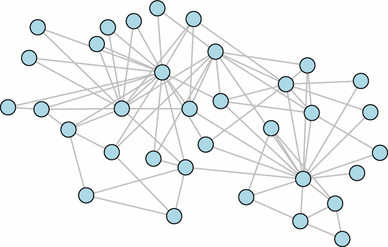
During our time at Girls Talk Math, we learned about the wonders of network science and graph theory. The difficult part of this otherwise enjoyable journey? Mathematica. Mathematica is a software created to make you suffer, especially if you already know computer science (AHEM BECKY). Basically, we created graphs, did calculations and got confused on Mathematica. Typing out all the commands took ages. We’ll show you some examples as we go through the different concepts we explored. Don’t worry- once you spend some time on Mathematica, you’ll get used to it.

Continue reading

Classification of Surfaces

By Ayanna Blake, Lisa Oommen*, Myla Marve, Tamarr Moore, Caylah Vickers, and Lily Zeng.

*Lisa helped the group work through the problem set but was unfortunately unable to attend camp during the blog writing.

The Girls Talk Math camp is about female high school students from different places who discuss mathematics, mathematicians, and theories. We were split up into groups and were assigned different math topics to learn. Our topic was classification of surfaces, which is listed under the umbrella topic of abstract geometry.

We thought the surfaces project was very interesting and cool to learn about, because it introduced us to college level math and allowed us to understand different parts of geometry. Along with gaining knowledge of surfaces, we also got to learn about other groups topics. Campers presented their topics on the last day and helped us to perceive the significance of the different subjects.

Continue reading

Quantum Mechanics

By Kathryn Benedict, Olivia Fugikawa, Denna Huang, and Eleanor McAdon

Intro

Quantum mechanics is a subfield of physics. Like with any other major area of study, physics is divided into many smaller categories. Classical physics is the main one, which includes Newton’s Laws of Motion and basic principles of mechanics, like inertia and friction. Things get weird when you delve into modern physics, which includes special relativity, general relativity, and quantum mechanics. Special relativity deals with particles moving at the speed of light, general relativity works with incredibly massive objects and quantum mechanics is the physics of subatomic particles. This is what we worked on for the past two weeks and what our blog post is about!

Continue reading

Knot Theory

By Jillian Byrnes, Monique Dacanay, Kaycee DeArmey,  Alana Drumgold, Ariyana Smith*, and Wisdom Talley*.

*Ariyana and Wisdom helped the group work through the problem set but were unfortunately unable to attend camp during the blog writing.

A mathematical knot is a loop in three-dimensional space that doesn’t intersect itself, and knot theory is the topological study of these knots. Two knots are considered to be equivalent if they can be stretched or bent into each other without cutting or passing  through themselves. The simplest of these knots is known as the unknot, which is just a circle or its equivalence. Similar to a knot is a link, which is multiple knots intersecting each other. Both knots and links are often described in the form of knot diagrams, which are two-dimensional representations of the three-dimensional shape. There are an infinite number of both knots and links, but here are a few examples in diagram form:

Continue reading

Elliptic Curve Cryptography

By Noa Bearman, Kimberly Cruz Lopez, Tina Lin, Xintong Xiang, and Maria Neri Otero*

*Maria helped the group work through the problem set but was unfortunately unable to attend camp during the blog writing.

Screen Shot 2017-06-29 at 1.50.17 PM

Introduction

Have you ever tried to send a secret message to a friend? Did it work? Was it secure? Well, one way to do so in a more secure way is by using Elliptic Curve Cryptography (ECC). Most people have never heard of ECC before, and two weeks ago, neither did we. However, in the past two weeks, we have been learning how to use this exciting application of the techniques of algebraic geometry and abstract algebra applied to the ancient art of keeping messages secure. ECC was first introduced by Victor Miller and Neal Koblitz in 1985. It was proposed as an alternative to other forms of cryptography with public-key systems such as DSA and RSA. Public-key systems involve the use of two different kinds of keys: a public key that is available to the public and a private key in which only the owner knows. The applications of ECC has been growing and has recently gained a lot of attention in industry and academia. The following information below will go more in-depth on what ECC is, how it works, its advantages, its disadvantages, and our progression throughout this course.

Continue reading

Intro to Relativity

By: Miranda Copenhaver, Chloe Nash, Wanda Wilkins, Lauren Behringer, and Jazmin Santillan C.


Throughout this week, we have worked through multiple problems dealing with both classical mechanics and special relativity. We found the main difference between classical mechanics and special relativity to be the assumptions made about time as a constant. This is what we mean:

  • In classical mechanics it is assumed that time is a constant that is observed the same for all viewers.
  • In special relativity time cannot be taken as a constant. Because the speed of light is the same for all observers, time-dilation occurs.

So, if you are getting a little lost it’s completely normal. We have a couple of examples of both classical mechanics and special relativity below:

Continue reading

RSA Encryption Cryptography

By Camille Clark, Layke Jones, Isabella Lane, Aza McFadden*, and Lizbeth Otero.

*Aza helped the group work through the problem set but was unfortunately unable to attend camp during the blog writing.

Cryptography is a field of coding and decoding information. It relies on the framework of number theory. Therefore, it can be used to connect theories as well as teaching others the fundamental properties of integers. Relevant number theory topics are modular arithmetic, prime factorization, greatest common divisor, and theorems such as the Chinese Remainder Theorem and Euler’s Theorem. This blog post will focus on the first three topics.

Continue reading

Special Relativity

By Katie Clark, Tori Dunston, Kelly Fan, Abrianna Macklin, and McKenna Vernon

Picture a hummingbird. At any moment, it can go in any of the three dimensions it is a part of. So, it could go up and down, forwards and backwards, or left and right. But, one thing that is not taken into account is time. As it moves through space, it is also occupying time. However, we’re not used to thinking about our world in a four dimensional sense. But, as the movement of the pigeon progresses, so does time. This is known as the relationship between space and time, and it is the primary foundation that special relativity is built on. So, at any given moment, it actually can move in four dimensions at once. This can be simply modeled using a spacetime diagram.

lightcone3

Continue reading